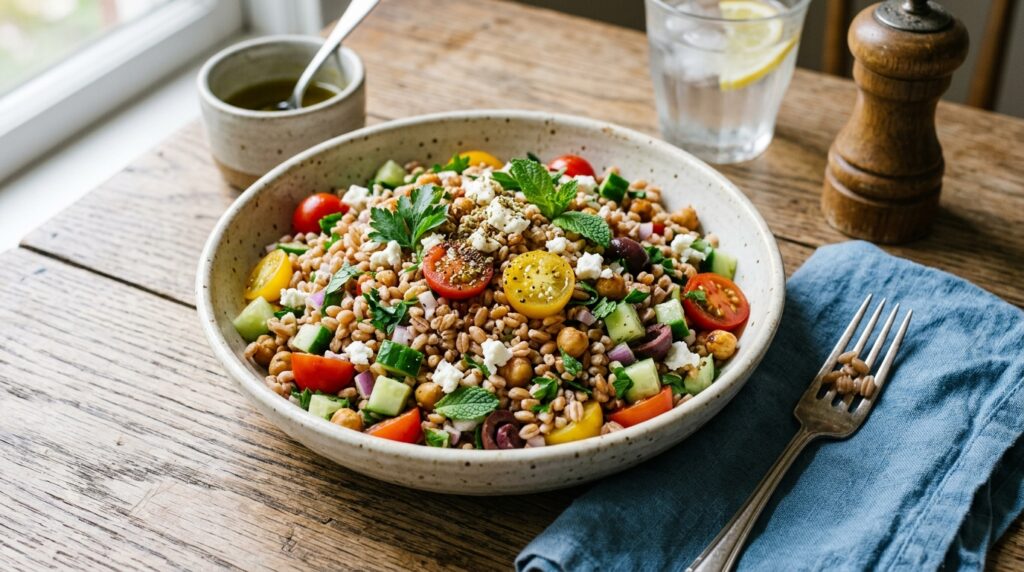

If you have scrolled through social media lately, you have likely spotted a vibrant, grain-based bowl taking over your feed. This farro salad recipe has become the ultimate lunch staple for busy professionals across the United States. It perfectly balances chewy textures with fresh, seasonal produce.

Why are so many people obsessed with this dish? It is incredibly versatile and holds up beautifully in the fridge for meal prep. Whether you are heading to the office or enjoying a weekend picnic, this hearty meal keeps you satisfied for hours. Let’s dive into how you can master this modern kitchen favorite at home.
Key Takeaways
- This dish is the top choice for healthy, efficient meal prep in 2026.
- The combination of nutty grains and fresh vegetables creates a perfect nutritional balance.
- It is highly customizable based on the seasonal ingredients available in your local market.
- Properly cooking the base grain ensures the ideal chewy texture for your bowl.
- Simple dressings can elevate the flavors of this popular lunch staple instantly.
Why Farro Has Become the Ultimate Millennial Staple
Farro has become a staple in many millennial diets due to its rich history, nutritional benefits, and adaptability in various recipes. This ancient grain has managed to bridge the gap between traditional cuisine and modern health-conscious eating.
The Nutritional Profile of Ancient Grains
Farro is renowned for its impressive nutritional profile. It is rich in fiber, proteins, and various minerals such as magnesium and iron. The grain is also a good source of complex carbohydrates, making it a satisfying and filling ingredient in salads and other dishes.
Nutritional Highlights of Farro:
| Nutrient | Amount per 100g | Benefits |
|---|---|---|
| Fiber | 10g | Aids digestion and satiety |
| Protein | 12g | Supports muscle health and repair |
| Magnesium | 150mg | Essential for energy production and nerve function |
Texture and Versatility in Modern Cooking
One of the key reasons farro has become a favorite among millennials is its unique texture and versatility. It retains a satisfying chewiness even after cooking, making it an excellent base for healthy farro salad recipes. Moreover, farro can be easily incorporated into a variety of dishes, from Mediterranean-inspired salads to hearty winter stews.
Farro’s adaptability extends to its ability to pair well with a wide range of flavors and ingredients. Whether you’re making a mediterranean farro salad with olives and feta or adding it to a vegetable stir-fry, farro absorbs flavors beautifully while maintaining its texture.
Essential Ingredients for Your Farro Salad Recipe
The foundation of a simple farro salad lies in its essential components. To create a dish that’s both flavorful and nutritious, you’ll need to select the right ingredients.
Selecting the Right Type of Farro
Farro is an ancient grain that comes in different forms, each with its unique characteristics. Choosing the right type is crucial for the texture and flavor of your salad.
Pearled vs. Semi-Pearled vs. Whole Farro
Farro is available in three main forms: pearled, semi-pearled, and whole. Pearled farro has been processed to remove its outer husk, making it cook faster but potentially losing some nutrients. Semi-pearled farro strikes a balance between cooking time and nutritional value, as it has only part of its husk removed. Whole farro retains its entire grain, offering the most nutritional benefits but requiring longer cooking times.
| Type of Farro | Cooking Time | Nutritional Value |
|---|---|---|
| Pearled Farro | 15-20 minutes | Lower |
| Semi-Pearled Farro | 20-25 minutes | Moderate |
| Whole Farro | 30-40 minutes | Higher |
Fresh Produce and Seasonal Add-ins
Incorporating fresh and seasonal produce not only enhances the flavor but also adds texture and color to your farro salad. Consider using vegetables like roasted sweet potatoes, grilled zucchini, or fresh cherry tomatoes to add variety.

Choosing the Perfect Dressing Components
The dressing can make or break your farro salad. A good dressing should balance acidity, sweetness, and richness. Olive oil and lemon juice are staples for a light and refreshing dressing, while Dijon mustard and honey can add depth and a touch of sweetness.
Preparing the Farro for Optimal Texture
To make a truly exceptional farro grain salad, you must start with properly prepared farro. The texture of farro can significantly impact the overall quality of your salad, making preparation a crucial step.
The Soaking Debate
One of the most debated topics in farro preparation is whether or not to soak the grains before cooking. Soaking can help reduce cooking time and may improve the texture by rehydrating the grains. However, it’s not always necessary, especially if you’re using pearled or semi-pearled farro, which cooks more quickly.
For whole-grain farro, soaking overnight can be beneficial. It helps to break down some of the phytic acid, making the grain’s nutrients more accessible. If you choose to soak, make sure to rinse the farro thoroughly afterward to remove any remaining impurities.
Boiling Techniques for the Perfect Al Dente Bite
Cooking farro to the perfect al dente texture is key to a great salad. Start by bringing a large pot of salted water to a boil. The general rule of thumb is to use about 3 cups of water for every 1 cup of farro. Once boiling, add the farro and cook until it’s tender but still retains a bit of bite.
For pearled farro, this typically takes around 15-20 minutes, while whole-grain farro may require 30-40 minutes. It’s essential to check the farro frequently towards the end of the cooking time to avoid overcooking, which can result in a mushy texture.
Cooling and Storing Grains for Meal Prep
After cooking, drain the farro and rinse it under cold running water to stop the cooking process. Spreading the farro out on a baking sheet can help it cool down quickly, which is crucial if you’re planning to use it in a salad. Once cooled, you can store the farro in an airtight container in the refrigerator for up to 3 days.
For meal prep, cooling and storing farro properly is essential. It allows you to prepare the grain base ahead of time, making it easy to assemble your farro grain salad when needed. Simply combine the cooled farro with your choice of vegetables, proteins, and dressing, and you’re ready to go.
Step-by-Step Guide to Assembling the Salad
With the right ingredients and a straightforward approach, you can craft a farro salad that’s both nutritious and visually appealing. Assembling the salad involves several key steps that, when followed, result in a dish that’s greater than the sum of its parts.
Step One: Preparing the Grain Base
The foundation of a great farro salad is the grain itself. Start by cooking the farro according to the package instructions or your preferred method, ensuring it reaches the perfect al dente texture. Once cooked, allow the farro to cool completely. This step is crucial as it prevents the vegetables from becoming soggy when mixed with the warm grain.
Step Two: Chopping and Prepping Fresh Vegetables
While the farro cools, you can begin preparing the fresh vegetables. Choose a variety of colors and textures to make the salad visually appealing. Common additions include cherry tomatoes, cucumbers, bell peppers, and red onions. Chop these ingredients into bite-sized pieces and set them aside in a large bowl.
Step Three: Emulsifying the Dressing
A well-emulsified dressing is key to a delicious farro salad. In a small bowl, whisk together your chosen dressing ingredients until they are fully incorporated. Typical components include olive oil, lemon juice, Dijon mustard, and a pinch of salt and pepper. The emulsification process ensures that the dressing coats the farro and vegetables evenly, enhancing the overall flavor.
Step Four: The Art of the Toss
Once all the components are ready, it’s time to assemble the salad. In a large bowl, combine the cooled farro, chopped vegetables, and any additional ingredients like nuts or cheese. Pour the dressing over the top and gently toss the salad until everything is well coated. This final step requires a bit of finesse to ensure that the salad is mixed thoroughly without becoming mushy.
By following these steps, you can create a delicious farro salad that’s perfect for any occasion. Whether you’re meal prepping for the week or serving a crowd, this guide helps you achieve a dish that’s both healthy and flavorful.
Flavor Profiles and Mediterranean Inspirations
With its nutty flavor and satisfying texture, farro is an ideal base for salads that draw on the vibrant flavors of the Mediterranean.
The Mediterranean diet is renowned for its emphasis on fresh vegetables, fruits, whole grains, and healthy fats, all of which can be beautifully incorporated into a farro salad. By combining farro with ingredients like juicy tomatoes, crunchy cucumbers, and tangy feta cheese, you can create a dish that is both nourishing and flavorful.
Incorporating Fresh Herbs and Aromatics
Fresh herbs such as parsley, mint, and basil are staples in Mediterranean cuisine, adding a burst of freshness to any dish. When making a farro salad, incorporating these herbs can elevate the flavor profile significantly. For instance, a sprinkle of chopped parsley can add a fresh, green note, while a few leaves of mint can introduce a cooling contrast.
Aromatics like garlic and shallots are also fundamental in Mediterranean cooking. They add depth and a richness that complements the earthy taste of farro. By sautéing these aromatics lightly before adding them to the salad, you can bring out their natural sweetness and enhance the overall flavor.

Adding Protein for a Balanced Meal
A well-rounded salad should include a good source of protein to make it satisfying and filling. For a vegetarian farro salad, there are several protein-rich ingredients you can incorporate.
Plant-Based Proteins: Chickpeas and Tofu
Chickpeas are a popular choice in Mediterranean cuisine, offering a good dose of protein and fiber. They can be added directly to the farro salad or roasted for a crunchier texture. Tofu is another versatile option that can be marinated and grilled or pan-fried to add a protein-packed element to your salad.
Animal-Based Proteins: Grilled Chicken and Feta
For those who consume animal products, grilled chicken is an excellent addition to farro salad, providing lean protein and a smoky flavor. Feta cheese, with its tangy and salty taste, not only adds protein but also enhances the Mediterranean flavor profile of the dish.
By thoughtfully combining these ingredients, you can create a farro salad that is not only delicious but also balanced and nutritious.
Mastering the Dressing Emulsion
A well-crafted dressing emulsion is the backbone of a delicious summer farro salad, bringing together disparate ingredients in harmony. The emulsion is what ties the salad together, ensuring each bite is a perfect balance of flavors.
To achieve this balance, it’s crucial to understand the components of a good dressing emulsion. At its core, a dressing emulsion is about balancing two main elements: acid and fat.
Balancing Acid and Fat
The acid component, typically provided by vinegar or lemon juice, adds brightness and cuts through the richness of other ingredients. On the other hand, the fat component, usually oil, contributes to the overall richness and texture of the salad. Finding the right balance between these two elements is key to creating a dressing that complements the farro and other ingredients without overpowering them.
| Acid Component | Fat Component | Resulting Flavor Profile |
|---|---|---|
| Lemon Juice | Olive Oil | Bright, Mediterranean-inspired |
| Apple Cider Vinegar | Avocado Oil | Mild, slightly sweet |
| Balsamic Vinegar | Grapeseed Oil | Rich, fruity |
The Role of Honey and Dijon Mustard
Honey and Dijon mustard play crucial roles in enhancing the dressing emulsion. Honey adds a touch of sweetness, balancing out the acidity, while Dijon mustard contributes a tangy flavor and helps stabilize the emulsion.
When using honey and Dijon mustard, it’s essential to strike the right balance. Too much honey can make the dressing overly sweet, while too much mustard can overpower the other flavors.
Infusing Flavors with Fresh Garlic and Shallots
Fresh garlic and shallots are excellent additions to a dressing emulsion, providing a depth of flavor that elevates the entire salad. By mincing or pureeing these ingredients into the dressing, you can distribute their flavors evenly throughout the salad.
For a refreshing summer farro salad, consider incorporating minced garlic and shallots into your dressing emulsion. This will not only add flavor but also complement the fresh, seasonal ingredients typically found in summer salads.
Customizing Your Salad for Every Season
One of the joys of making a simple farro salad is its versatility across different seasons. This adaptability makes it a perfect dish for any time of the year, as you can incorporate the freshest ingredients available during each season.
The beauty of a farro salad lies in its ability to be reinvented. By changing the ingredients according to the season, you can keep your meals exciting and tailored to the best produce available.
Summer Farro Salad with Stone Fruits and Tomatoes
Summer brings an array of vibrant colors and flavors, making it the perfect time to incorporate stone fruits like peaches and nectarines into your farro salad. Combine these with juicy tomatoes, fresh basil, and a light vinaigrette for a refreshing summer dish.

Autumn Variations with Roasted Squash and Pecans
As autumn arrives, the sweetness of roasted squash pairs beautifully with the nutty flavor of farro. Add some crunch with toasted pecans and a hint of warm spices to create a hearty and comforting salad.
Winter Twists with Citrus and Pomegranate
Winter is the season for brightening up your meals with citrus fruits. Incorporate segments of oranges or grapefruits into your farro salad, and add some pomegranate seeds for a burst of color and flavor. A citrus-herb vinaigrette can tie the whole dish together.
By embracing the seasonal produce, you can enjoy a simple farro salad that’s not only delicious but also reflects the best of what each season has to offer.
Common Mistakes to Avoid When Making Farro Salad
When it comes to making a healthy farro salad, even the most well-intentioned cooks can fall into common traps that compromise the dish’s texture and flavor. Understanding these potential pitfalls is key to creating a salad that is both nutritious and delicious.
Preventing Mushy Grains
One of the most common issues with farro salad is ending up with mushy grains. This can be avoided by properly cooking the farro. It’s essential to cook farro until it’s al dente, as overcooking can lead to an unappealing texture.
Tips for Perfectly Cooked Farro:
- Cook farro in plenty of water, similar to cooking pasta.
- Check the texture frequently towards the end of the recommended cooking time.
- Rinse cooked farro with cold water to stop the cooking process.
Avoiding Soggy Greens and Vegetables
Soggy greens and vegetables can ruin an otherwise great farro salad. To avoid this, it’s crucial to prepare your vegetables properly.
Drying and storing vegetables correctly can make a significant difference. After washing and chopping your vegetables, dry them thoroughly before adding them to your salad.
| Vegetable | Drying Method | Storage Tip |
|---|---|---|
| Lettuce | Spin dry or pat dry with a towel | Store in a sealed container lined with paper towels |
| Tomatoes | Gently pat dry with a towel | Store at room temperature until ready to use |
| Cucumbers | Wipe dry with a clean cloth | Wrap in plastic wrap and refrigerate |
Balancing Salt and Seasoning
Balancing the seasoning in your farro salad is crucial for bringing out the flavors. Too little salt can result in a bland salad, while too much can overpower it.
A Simple Seasoning Guide:
- Start with a small amount of salt and adjust to taste.
- Add aromatics like garlic and shallots to enhance flavor.
- Use a balanced dressing that complements the ingredients.

By avoiding these common mistakes, you can create a healthy farro salad that is both delicious and visually appealing. Remember, the key to a great salad is in the details, from cooking the farro perfectly to balancing the seasoning just right.
Pro Tips for Meal Prepping and Storage
To keep your farro grain salad fresh for days, follow these pro tips on meal prepping and storage. Meal prep is a crucial step in enjoying your farro salad throughout the week without compromising on freshness or flavor.
Keeping Ingredients Separate for Freshness
One of the most effective ways to maintain the freshness of your farro salad is by keeping its ingredients separate until you’re ready to serve. This includes storing the dressing, proteins, and vegetables in separate containers. By doing so, you prevent the grains from becoming soggy and the vegetables from losing their crunch.
Tip: Use airtight containers to store each component. This will help in preserving the texture and flavor of each ingredient.
How Long Does Farro Salad Last in the Fridge?
The shelf life of farro salad largely depends on how it’s stored. Generally, if stored properly in the refrigerator, farro salad can last for up to 3 to 5 days. It’s essential to check the salad for any signs of spoilage before consuming it, even if it’s within the storage timeframe.
- Check for off smells or slimy texture.
- Ensure it has been stored at a consistent refrigerator temperature below 40°F (4°C).
Reviving Leftovers with Fresh Herbs
Reviving leftover farro salad is easy with the addition of fresh herbs. Adding a sprinkle of chopped fresh parsley, basil, or mint can instantly elevate the flavor and freshness of the salad. You can also consider adding a squeeze of lemon juice or a drizzle of your favorite dressing to refresh the salad.
Pro Tip: Experiment with different herbs and dressings to find your favorite combination. This not only revives the salad but also gives it a new twist.
Conclusion
Farro salad has become a staple in many kitchens due to its simplicity and versatility. With the steps outlined in this guide, you can create a delicious and healthy meal that suits your taste preferences. From selecting the right type of farro to customizing your salad with seasonal ingredients, the possibilities are endless.
By mastering the art of preparing farro and combining it with fresh produce, herbs, and a well-balanced dressing, you can enjoy a nutritious meal that’s perfect for any time of the day. Whether you’re meal prepping for the week or looking for a quick and easy lunch, farro salad is an excellent choice.
Experiment with different flavors and ingredients to make farro salad your own. Try incorporating various proteins, nuts, or seeds to add texture and nutrition. With its rich nutritional profile and adaptability, farro salad is sure to become a favorite in your kitchen.