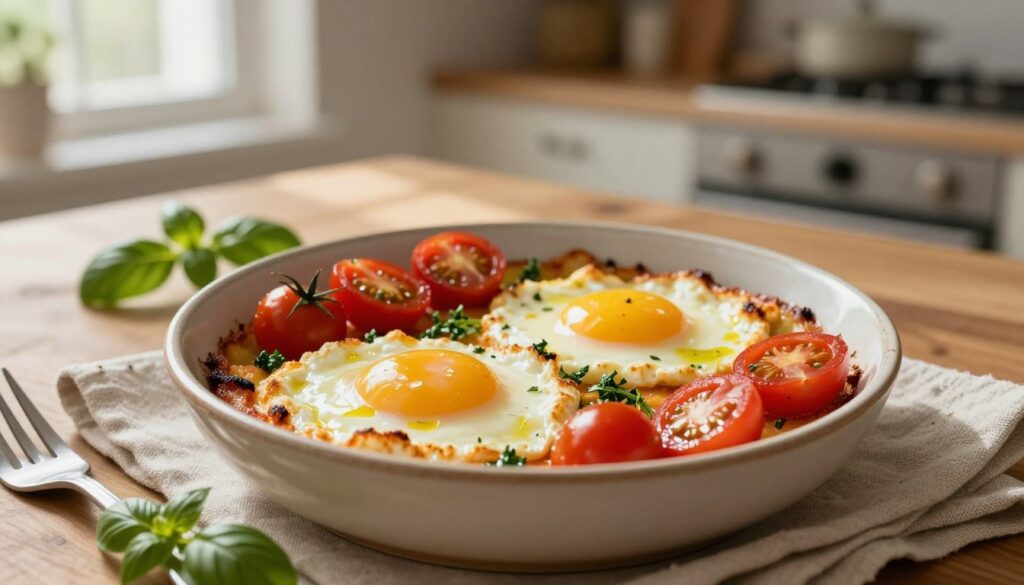

Are you searching for a morning meal that is both fast and flavorful? Many people struggle to find time for a nutritious breakfast during the busy work week. This baked feta eggs recipe offers the perfect solution for those who crave something savory without spending hours in the kitchen.

This dish transforms basic pantry staples into a gourmet experience. By combining creamy cheese with protein-rich ingredients, you create a satisfying plate that keeps you full until lunch. It is truly an easy baked feta eggs method that works for beginners and seasoned cooks alike.
You will love how the flavors meld together in the oven. It is a healthy, low-effort way to start your day on the right foot. Let’s dive into how you can master this delightful meal in your own home.
Key Takeaways
- This meal is perfect for busy mornings when you need high protein.
- The preparation process requires minimal cleanup and basic kitchen tools.
- You can customize the dish with your favorite fresh herbs or spices.
- It provides a balanced nutritional profile to fuel your daily activities.
- The creamy texture makes it a crowd-pleasing option for brunch guests.
The Rise of the Baked Feta Eggs Recipe
With its simplicity and flavor, the Baked Feta Eggs Recipe has risen to fame, making it a favorite among breakfast lovers. This dish, which combines the richness of feta cheese with the versatility of eggs, has become a staple in many kitchens. But what makes it so special?
Why This Dish Became a Viral Sensation
The Baked Feta Eggs Recipe gained popularity on social media platforms, where its visually appealing presentation and ease of preparation made it a hit. Food bloggers and influencers shared their own versions, experimenting with different flavors and ingredients, further fueling its viral spread.
- Easy to make and requiring minimal ingredients
- Visually appealing, making it perfect for social media sharing
- Customizable to suit various tastes and dietary preferences
The combination of these factors contributed to its widespread adoption and popularity.
Nutritional Benefits of Feta and Eggs
Feta cheese and eggs, the main ingredients of this recipe, offer numerous health benefits. Feta is rich in protein and calcium, while eggs are an excellent source of protein and various vitamins. Together, they make for a nutritious breakfast option.
| Nutrient | Feta Cheese | Eggs |
|---|---|---|
| Protein | High | High |
| Calcium | Rich | Moderate |
| Vitamin D | Low | Rich |
By combining feta and eggs, the Baked Feta Eggs Recipe provides a balanced mix of nutrients, making it a healthy choice for breakfast or brunch.
Essential Ingredients for Your Feta Egg Bake
Crafting the perfect baked feta breakfast begins with selecting the finest ingredients. The quality of your feta cheese, eggs, and herbs will significantly impact the flavor and texture of your dish.
Selecting the Best Quality Feta Cheese
The star of the baked feta eggs recipe is undoubtedly the feta cheese. Opt for a high-quality, crumbly feta that is rich in flavor. Greek or Bulgarian feta is often recommended for its authentic taste. When shopping, look for feta that is stored in brine, as it tends to be fresher and have a better texture.
Choosing the Right Eggs and Fresh Herbs
Fresh eggs are crucial for achieving the perfect baked eggs. Choose eggs that are as fresh as possible for the best results. Additionally, fresh herbs like parsley, dill, or chives add a burst of flavor and color to your dish. Consider what herbs complement the flavor profile you’re aiming for.
Optional Add-ins to Customize Your Breakfast
To make your feta egg bake more substantial or to suit your taste preferences, consider adding other ingredients. Diced vegetables like bell peppers, spinach, or cherry tomatoes can add nutrition and flavor. For protein enthusiasts, incorporating cooked sausage or bacon can be a great addition.

By carefully selecting your ingredients, you can elevate your baked feta eggs recipe from simple to spectacular. Remember, the key to a delicious feta egg bake lies in the freshness and quality of its components.
Equipment Needed for the Perfect Bake
The right equipment can make all the difference in preparing a delicious baked feta recipe. To ensure your dish turns out perfectly, you’ll need to have the right tools and cookware.
Choosing the Right Baking Dish or Skillet
Selecting the appropriate baking dish or skillet is crucial for achieving the perfect bake. A dish that distributes heat evenly is essential for cooking the feta and eggs consistently. Consider using a ceramic or cast-iron skillet, as these materials retain heat well and can achieve a nice crust on the feta.
When choosing a baking dish, ensure it is large enough to hold the feta cheese and eggs comfortably. A dish that is too small can cause the eggs to overflow during baking. Typically, a 6-inch to 8-inch skillet or baking dish works well for this recipe.
Must-Have Kitchen Tools for Preparation
In addition to the right baking dish, you’ll need some essential kitchen tools to prepare your baked feta eggs recipe. These include:
- A mixing bowl for cracking eggs and mixing seasonings
- A whisk or fork for beating the eggs
- A spatula for gently folding ingredients and serving
- A cutting board for chopping fresh herbs
- A cheese knife for cutting the feta cheese
Having these tools on hand will make the preparation process smooth and efficient, allowing you to focus on creating a delicious dish.
Preparing Your Workspace and Ingredients
Before diving into the baked feta eggs recipe, it’s essential to prepare your workspace and ingredients for a seamless cooking experience. A clutter-free and well-organized kitchen not only makes the cooking process more enjoyable but also helps in achieving better results.
Step 1: Preheating and Oven Safety
Preheating your oven is the first step in preparing your baked feta eggs. Ensure your oven is set to the correct temperature, usually around 375°F (190°C) for this recipe. It’s also crucial to check that your oven racks are positioned correctly to allow for even heating. Always use oven mitts when handling hot dishes to prevent burns.
Step 2: Preparing the Feta Base
Next, prepare the feta base by crumbling the feta cheese into a baking dish or skillet. The quality of the feta can significantly impact the flavor, so choose a high-quality, salty feta for the best results. You can also add some fresh herbs like parsley or dill around the feta for added flavor.

Step 3: Seasoning and Flavor Infusion
Seasoning is a critical step that enhances the flavor of your baked feta eggs. Sprinkle some salt, pepper, and your choice of herbs over the feta. You can also drizzle a bit of olive oil to add richness. Consider the balance of flavors and adjust the seasoning according to your taste preferences.
| Seasoning Options | Flavor Profile |
|---|---|
| Black Pepper | Adds a sharp, peppery flavor |
| Dried Oregano | Provides a warm, earthy taste |
| Fresh Parsley | Contributes a fresh, green flavor |
By following these initial steps, you’ll be well on your way to creating a delicious and satisfying baked feta eggs recipe that’s sure to impress.
Mastering the Baked Feta Eggs Recipe
Now that you’ve prepared your ingredients and workspace, it’s time to dive into the baking process. This stage is crucial for achieving the perfect baked feta with eggs. The key is to balance the creaminess of the feta with the doneness of the eggs.
Step 4: Cracking the Eggs into the Feta
Gently crack the eggs into the baking dish with the feta, making sure not to break the yolks if you prefer them runny. The number of eggs can vary based on serving size, but typically, 2-4 eggs work well depending on the dish size.
For a more indulgent treat, consider adding an extra egg yolk on top for an extra rich flavor.
Step 5: Achieving the Perfect Egg Doneness
The doneness of the eggs is a matter of personal preference. For runny yolks, bake for a shorter time. If you prefer your yolks more set, bake for a few minutes longer. Keep an eye on the eggs as oven temperatures can vary.
Step 6: Monitoring the Bake Time
Monitoring the bake time is essential for a perfect baked feta brunch recipe. Generally, baking at 375°F (190°C) for 15-20 minutes yields great results. However, check on your dish at around 12 minutes and adjust the time as needed.
Once the eggs are cooked to your liking and the feta is golden and bubbly, remove it from the oven. Your baked feta with eggs is now ready to be served.
Tips for Achieving the Perfect Texture
A perfectly textured baked feta eggs dish can make all the difference in your breakfast. The harmony between the creamy feta and the eggs is what elevates this simple recipe to a delightful culinary experience.
How to Get Creamy Feta Without Burning
To achieve creamy feta without burning, it’s essential to monitor the baking temperature and time. Baking at a moderate temperature, around 375°F (190°C), helps in melting the feta evenly.
Use a baking dish that distributes heat evenly, such as a ceramic or cast-iron skillet, to prevent hotspots that can burn the feta.
Managing Egg Whites and Yolks
The doneness of eggs is crucial in feta egg bake. For a runny yolk, bake for 15-18 minutes. If you prefer a firmer yolk, extend the baking time to 20-22 minutes.
Managing egg whites involves gently cracking them into the baking dish to avoid breaking the yolks. This technique ensures that the eggs cook evenly and maintain their desired texture.
Troubleshooting Common Baking Issues
Common issues like overcooking or undercooking can be avoided by following a few simple tips. Here’s a quick reference table:
| Issue | Cause | Solution |
|---|---|---|
| Overcooked Eggs | High oven temperature or too much baking time | Reduce temperature to 375°F (190°C) and check eggs at 15 minutes |
| Undercooked Feta | Insufficient baking time or low oven temperature | Increase baking time or temperature slightly |
| Burnt Feta | High oven temperature or uneven heat distribution | Use a lower temperature and a baking dish with even heat distribution |
By following these tips and being mindful of the baking process, you can achieve a perfectly textured baked feta breakfast that will impress your family and friends.
Serving Suggestions for a Complete Brunch
Elevate your brunch game with our baked feta eggs recipe, perfectly paired with complementary sides and beverages. To create a well-rounded and satisfying meal, consider adding a few carefully chosen accompaniments to your baked feta eggs.
Best Bread Pairings for Dipping
The right bread can make all the difference when enjoying your baked feta eggs. Opt for a crusty baguette or a hearty ciabatta to scoop up the creamy feta and eggs. For a more rustic experience, try pairing with a warm, freshly baked focaccia or a crispy grissini.
- Crusty baguette
- Hearty ciabatta
- Warm focaccia
- Crispy grissini
Fresh Sides to Balance the Saltiness
Balance the richness of the baked feta eggs with some fresh and refreshing sides. A simple green salad or a mixed greens salad with seasonal fruits can provide a delightful contrast. You can also consider serving roasted or grilled vegetables, such as asparagus or bell peppers, to add some color and nutrients to your brunch.
- Simple green salad
- Mixed greens salad with seasonal fruits
- Roasted asparagus
- Grilled bell peppers
Beverage Pairings to Elevate Your Meal
The right beverage can elevate your baked feta eggs to a whole new level. For a refreshing and revitalizing option, consider serving a glass of freshly squeezed orange juice or a fruity spritzer. If you prefer something more relaxing, a warm cup of coffee or a soothing herbal tea can be the perfect accompaniment.

- Freshly squeezed orange juice
- Fruity spritzer
- Warm cup of coffee
- Soothing herbal tea
Variations on the Classic Feta and Egg Casserole
One of the best things about the feta and egg casserole is its adaptability to various ingredients and flavors. This versatility makes it easy to experiment with new ingredients, creating a different culinary experience each time.
The basic recipe serves as a canvas, allowing you to add your favorite ingredients to create a dish that suits your taste preferences. Whether you’re looking to add some extra nutrition, spice things up, or simply try something new, the easy baked feta eggs recipe is the perfect starting point.
Adding Vegetables for Extra Nutrition
Incorporating vegetables into your Baked Feta Eggs not only adds flavor but also boosts the nutritional value of the dish. Consider adding spinach, cherry tomatoes, or bell peppers to create a colorful and healthy breakfast.
- Spinach and Feta: Adds a burst of iron and antioxidants.
- Cherry Tomatoes: Provides a sweet contrast and a dose of vitamin C.
- Bell Peppers: Contributes a crunchy texture and vitamin B6.

Incorporating Proteins Like Sausage or Bacon
For those looking to add more protein to their breakfast, incorporating sausage or bacon into the feta and egg casserole is a great option. These meats not only add flavor but also help keep you fuller for longer.
| Protein | Flavor Profile | Nutritional Benefit |
|---|---|---|
| Sausage | Spicy, savory | High in protein |
| Bacon | Smoky, salty | Rich in B vitamins |
Spicy Twists for Heat Lovers
If you enjoy spicy foods, consider adding some heat to your easy baked feta eggs. You can incorporate diced jalapeños, red pepper flakes, or spicy sausage to give your breakfast a kick.
Spicy Variations:
- Diced jalapeños or serrano peppers for an intense heat.
- Red pepper flakes sprinkled on top for a subtle kick.
- Spicy sausage or chorizo for a bold flavor.
Storing and Reheating Your Leftovers
Leftover baked feta eggs can be just as enjoyable as when they were freshly made, if stored and reheated properly. This section will guide you through the best practices for maintaining the quality and safety of your baked feta eggs recipe leftovers.
Proper Storage Techniques for Food Safety
To keep your baked feta with eggs fresh, it’s crucial to store them correctly. Allow the dish to cool completely before transferring it to an airtight container. This prevents moisture buildup, which can lead to sogginess or bacterial growth.
Storage Tips:
- Cool the baked feta eggs to room temperature.
- Transfer the cooled eggs to an airtight container.
- Refrigerate within two hours of cooking.
How to Reheat Without Overcooking the Eggs
Reheating your baked feta eggs recipe requires care to maintain the texture and doneness of the eggs. The best method is to reheat gently, either in the oven or microwave, until the eggs are warmed through.
Oven Reheating: Preheat your oven to 300°F (150°C). Cover the container with aluminum foil to prevent drying out. Heat for about 10-15 minutes, or until the eggs are warmed through.
| Reheating Method | Temperature | Time |
|---|---|---|
| Oven | 300°F (150°C) | 10-15 minutes |
| Microwave | Medium Power | 30-45 seconds |
Can You Freeze Baked Feta Eggs?
Freezing is an option for longer-term storage, but it may affect the texture of the eggs and feta. If you choose to freeze, do so within a day of cooking. Use airtight, freezer-safe containers or freezer bags, and label them with the date.
Freezing Tips:
- Cool the baked feta eggs completely before freezing.
- Portion the eggs into usable amounts before freezing.
- Thaw overnight in the refrigerator before reheating.
Conclusion
Indulge in the simplicity and flavor of a baked feta breakfast, a dish that’s as nutritious as it is delicious. The feta egg bake has taken the culinary world by storm, and for good reason – it’s a perfect blend of creamy feta cheese, perfectly cooked eggs, and a hint of fresh herbs.
This recipe is not only a treat for the taste buds but also offers a healthy start to the day. With its high protein content and versatility, it’s an ideal meal for any time of day. Feel free to experiment with different variations, adding your favorite vegetables or proteins to make it your own.
Now that you’ve discovered the joy of a baked feta breakfast, it’s time to get creative and make it a staple in your kitchen. Try the feta egg bake today and enjoy a delicious, satisfying meal that’s sure to become a favorite.