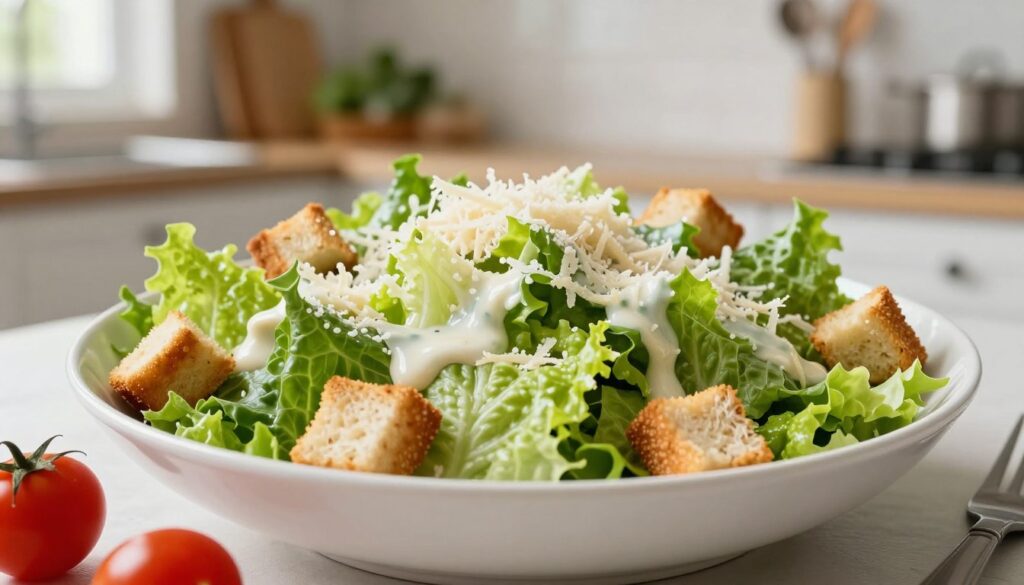

Finding a meal that tastes like a restaurant classic but takes almost no time is a total win for busy weeknights. You can whip up this fresh caesar salad in just fifteen minutes without breaking a sweat. It is the perfect solution when you want something light yet satisfying after a long day at work.
Crispy romaine lettuce pairs perfectly with a creamy, tangy dressing that hits all the right notes. This recipe focuses on simple steps and fresh ingredients to ensure every bite feels gourmet. You do not need to be a professional chef to master this iconic dish in your own kitchen.

Many people think great flavor requires hours of prep, but that is simply not the case here. By using a few smart shortcuts, you will have a bowl of deliciousness ready before the kitchen timer even dings. This approach keeps things stress-free while delivering a bold, savory taste that everyone in your family will love.
Let’s dive into how you can make this staple in your weekly rotation starting today. You will appreciate how quickly these ingredients come together to form a balanced and nutritious meal.
Key Takeaways
- Prepare a restaurant-quality meal in only 15 minutes.
- Use fresh romaine lettuce for the best crunch and flavor.
- Master a creamy dressing with simple pantry staples.
- Enjoy a healthy and filling lunch or dinner option.
- Save time with easy-to-follow preparation steps.
The Appeal of a Homemade Caesar Salad
The joy of a homemade Caesar salad is in the details, from the crisp lettuce to the tangy dressing. Making a Caesar salad at home allows you to experience the full depth of flavors that this classic dish has to offer.
Why Fresh Ingredients Make the Difference
Using fresh ingredients is crucial when making a classic Caesar salad recipe. Fresh romaine lettuce, high-quality parmesan cheese, and homemade croutons can elevate the salad from a simple side dish to a satisfying meal. The freshness of the ingredients ensures that each bite is full of flavor and texture.
The difference between a store-bought salad and a homemade Caesar salad lies in the quality and freshness of the ingredients. By choosing the best ingredients, you can avoid the preservatives and additives often found in commercial salads.
The History and Evolution of the Classic Caesar Salad
The Caesar salad has a rich history that dates back to the 1920s when it was first created by Caesar Cardini, an Italian restaurateur in Tijuana, Mexico. The original recipe has evolved over time, with various adaptations and interpretations. Despite these changes, the core elements of the salad have remained the same: romaine lettuce, croutons, parmesan cheese, and a tangy Caesar dressing.
Understanding the history and evolution of the Caesar salad can help you appreciate the nuances of this beloved dish and inspire you to create your own unique variations.
Essential Tools for Your Kitchen
Preparing a Caesar salad at home requires more than just the best Caesar salad ingredients; it demands the right kitchen tools. Having the appropriate equipment not only makes the preparation process smoother but also enhances the overall quality of your salad.
To start, let’s look at the fundamental tools you’ll need. A good Caesar salad recipe involves mixing, chopping, and serving, each requiring specific tools.
Choosing the Right Mixing Bowls and Whisks
When it comes to mixing your Caesar dressing and tossing your salad, the right bowls and whisks can make a significant difference. Stainless steel or glass bowls are ideal because they are non-reactive and easy to clean. For whisks, a balloon whisk is preferred for its ability to emulsify the dressing ingredients effectively.
Here’s a comparison of different types of mixing bowls:
| Material | Non-reactive | Ease of Cleaning |
|---|---|---|
| Stainless Steel | Yes | Easy |
| Glass | Yes | Easy |
| Plastic | No | Moderate |
The Importance of a Sharp Chef Knife
A sharp chef’s knife is indispensable for chopping the best Caesar salad ingredients, such as romaine lettuce and parmesan cheese. A dull knife can bruise the lettuce, leading to an unappealing salad. Regularly sharpening your knife ensures clean cuts and maintains the texture of your ingredients.
Investing in a good quality chef’s knife and maintaining its sharpness is crucial for any kitchen task, including preparing a Caesar salad.
By following these guidelines and ensuring you have the right tools, you’ll be well on your way to creating a delicious Caesar salad with the best ingredients.
Selecting the Best Caesar Salad Ingredients
The essence of atraditional Caesar saladlies in its simplicity and the quality of its ingredients. When it comes to creating this classic dish, every element counts, from the crispness of the lettuce to the savory flavor of the Parmesan cheese.
Picking the Perfect Romaine Lettuce
Romaine lettuce is the backbone of a Caesar salad. When selecting romaine lettuce, look for leaves that are crisp and have a vibrant green color. Avoid lettuce with wilted or brown edges, as this indicates age and a less than optimal flavor. For the best results, choose organic or locally grown romaine lettuce to ensure maximum freshness.

Quality Parmesan Cheese and Anchovy Selection
Parmesan cheese and anchovies are crucial for the distinctive flavor profile of a Caesar salad. For Parmesan, opt for a high-quality, aged Parmigiano-Reggiano. This type of Parmesan has a nuttier, more complex flavor that elevates the salad. When it comes to anchovies, choose ones that are packed in olive oil and have a good reputation for quality. The anchovies will dissolve into the dressing, leaving a salty, umami flavor.
| Parmesan Type | Age | Flavor Profile | Texture |
|---|---|---|---|
| Parmigiano-Reggiano | 24-36 months | Nutty, Fruity | Granular |
| Generic Parmesan | Varies | Mild, Salty | Often pre-shredded |
By focusing on the quality of the ingredients and understanding their roles in the salad, you can create a truly memorable Caesar salad experience.
Mastering the Easy Caesar Salad Dressing
To take your Caesar salad to the next level, focus on crafting a dressing that’s both creamy and balanced. The dressing is the backbone of this classic salad, and making it from scratch can elevate the entire dish.
A great easy Caesar salad dressing starts with understanding its core components: richness from the oil and egg, tanginess from the lemon, and depth from the anchovy and garlic. When these elements are in harmony, the dressing is not just a complement to the salad, but its defining feature.
Emulsifying Your Ingredients for a Creamy Texture
One of the challenges in making Caesar salad dressing is emulsifying the ingredients to achieve a smooth, creamy texture. Emulsification is the process of combining two or more liquids that wouldn’t normally mix, like oil and water. In the context of Caesar dressing, it involves blending oil with lemon juice or vinegar and egg.
- Start by finely mincing garlic and anchovies to release their flavors.
- Use a blender or food processor to emulsify the dressing, starting with the egg yolks, lemon juice, and a pinch of salt.
- Slowly drizzle in the olive oil while continuously blending until the mixture thickens.
Balancing Acidity and Saltiness
Achieving the right balance between acidity and saltiness is crucial for a great Caesar salad dressing. The lemon juice or vinegar provides the necessary acidity, while the anchovies contribute to the saltiness.
To balance these flavors:
- Taste the dressing as you go and adjust the seasoning accordingly.
- Add a squeeze of fresh lemon juice if the dressing becomes too thick or rich.
- If it’s too acidic, a bit more olive oil can help mellow out the flavor.
By mastering these elements, you’ll be able to create an easy Caesar salad dressing that’s not only delicious but also tailored to your taste preferences.
Preparing Crunchy Homemade Croutons
To elevate your Caesar salad to the next level, making your own croutons is a game-changer. Homemade croutons add a depth of flavor and texture that store-bought versions can’t match. They are also surprisingly easy to make.
Choosing the Best Bread for Texture
The foundation of great croutons is good quality bread. For a Caesar salad, you want a bread that will hold its texture when toasted. Baguette or Ciabatta are excellent choices due to their chewy interior and crispy crust. Avoid using overly soft or dense bread, as it may not yield the desired crunch.
When selecting bread, consider the age of the bread as well. Slightly stale bread works best for croutons because it is drier and will absorb flavors more evenly.
Seasoning and Toasting Techniques
To make your croutons, start by cutting your chosen bread into small, uniform cubes. Toss the bread cubes with olive oil, minced garlic, and your choice of seasonings. Italian seasoning or a simple mix of salt and pepper can enhance the flavor.
- Preheat your oven to 350°F (175°C).
- Toss the bread cubes with your chosen seasonings until they are evenly coated.
- Spread the bread cubes on a baking sheet in a single layer.
- Bake for 10-15 minutes, or until the croutons are golden brown and crispy.

Toasting the croutons until they are golden brown is crucial. Keep an eye on them to prevent burning. Once toasted, let the croutons cool completely before adding them to your Caesar salad.
Step-by-Step Assembly of Your Caesar Salad
The final step in making a great Caesar salad is assembling it with care. This involves a few crucial steps to ensure that your salad is not only delicious but also visually appealing.
Washing and Drying Your Greens Properly
Before you start assembling your salad, it’s essential to prepare your greens. Fresh romaine lettuce is the foundation of a great Caesar salad. To wash your greens, submerge them in a large bowl of cold water, gently agitating the leaves to remove any dirt. After washing, dry the leaves thoroughly using a salad spinner or by gently patting them dry with a clean towel.
Drying your greens is crucial because excess moisture can dilute the dressing and make the salad soggy. Properly dried greens will help the dressing cling to the leaves evenly, ensuring every bite is flavorful.
Tossing the Salad for Even Coating
Once your greens are prepared, it’s time to assemble the salad. In a large bowl, combine the washed and dried romaine lettuce, homemade croutons, and shaved Parmesan cheese. Drizzle the Caesar dressing over the salad and toss gently to coat the ingredients evenly.
The key to a great Caesar salad is achieving an even coating of the dressing. Use a pair of salad tongs or a large fork and spoon to gently toss the salad, ensuring that every leaf is coated with the dressing.
| Assembly Step | Action | Tips |
|---|---|---|
| 1. Prepare Greens | Wash and dry romaine lettuce | Use cold water and dry thoroughly |
| 2. Combine Ingredients | Add croutons and Parmesan cheese | Use homemade croutons for best flavor |
| 3. Dress the Salad | Drizzle Caesar dressing and toss | Toss gently for even coating |
By following these steps, you’ll be able to create a delicious and visually appealing Caesar salad that’s sure to impress. Enjoy your homemade Caesar salad!
Elevating Your Salad with Protein Additions
Elevate your Caesar salad game by adding chicken, shrimp, or bacon for a protein-packed meal. Incorporating protein not only enhances the flavor but also increases the nutritional value, making it a more satisfying and filling option.

Preparing a Quick Caesar Salad with Chicken
Adding chicken to your Caesar salad is a great way to make it more substantial. You can grill or bake chicken breast and slice it into strips. Seasoning the chicken with herbs and spices before cooking can add extra flavor. Once cooked, let it cool before tossing it with your Caesar salad.
For a quicker option, using pre-cooked or rotisserie chicken is also a convenient and time-saving method. Simply shred or chop the chicken and mix it into your salad.
Adding Caesar Salad with Shrimp or Bacon
For seafood lovers, adding shrimp to your Caesar salad can be a delightful twist. Shrimp can be sautéed in garlic butter or simply grilled. Ensure they are cooked until pink and just done to avoid overcooking.
Bacon adds a smoky, savory flavor to the Caesar salad. Cooking bacon until crispy and then crumbling it into the salad provides a nice textural contrast. You can also use bacon bits for a quicker alternative.
Both shrimp and bacon can elevate the flavor profile of your Caesar salad, offering a delicious variation to the classic recipe. Experiment with different cooking methods and seasonings to find your favorite combination.
Creative Caesar Salad Variations
Transform the classic Caesar salad into a new culinary experience by experimenting with different vegetables and cheeses. The traditional recipe is a timeless favorite, but with a few simple tweaks, you can create a dish that’s both familiar and innovative.
Incorporating Seasonal Vegetables
One of the easiest ways to give your Caesar salad a fresh twist is by incorporating seasonal vegetables. During the spring, consider adding asparagus or peas for a burst of sweetness and color. In the summer, grilled zucchini or bell peppers can add a smoky flavor and satisfying crunch.
In the fall, roasted butternut squash or Brussels sprouts can bring a delightful contrast in texture and flavor. Winter months are perfect for incorporating roasted root vegetables like carrots or parsnips, which add a sweet and earthy dimension to the salad.

Experimenting with Different Cheese Varieties
While Parmesan is the traditional choice for Caesar salad, experimenting with different cheese varieties can elevate the dish. Pecorino Romano, with its sharp and salty flavor, is a great alternative that pairs well with the tangy Caesar dressing.
For a milder flavor, Grana Padano or Asiago can be used, offering a creamy texture and rich taste. You can also mix and match different cheeses to create a unique flavor profile that suits your taste.
Common Mistakes to Avoid When Making Caesar Salad
Even with a simple classic Caesar salad recipe, there are several errors that can compromise the final result. Understanding these common mistakes can help you create a more enjoyable and satisfying salad.
Preventing Soggy Greens and Croutons
One of the most common issues with Caesar salads is soggy greens and croutons. To avoid this, it’s crucial to:
- Dry the romaine lettuce thoroughly after washing. Excess moisture can lead to sogginess.
- Add croutons just before serving to maintain their crunchiness.
- Store croutons in an airtight container to keep them fresh.
Achieving the Perfect Dressing Consistency
The dressing is a critical component of a Caesar salad. To achieve the perfect consistency:
- Emulsify the dressing ingredients properly. This involves slowly combining the oil with the egg yolks and lemon juice.
- Avoid over-processing the dressing, as it can become too thick.
- Adjust the seasoning and acidity to taste.
By following these tips, you can create a classic Caesar salad recipe that is both delicious and visually appealing.
Conclusion
Creating a homemade Caesar salad is a straightforward process that yields impressive results. With the right ingredients and techniques, you can enjoy a fresh and flavorful salad in just 15 minutes.
By following the steps outlined in this article, you’ll be able to craft a Caesar salad that rivals those found in restaurants. From selecting the perfect romaine lettuce to mastering the art of emulsifying the dressing, every detail matters.
Feel free to get creative with your Caesar salad by incorporating seasonal vegetables, different cheese varieties, or protein additions like chicken or shrimp. The versatility of this classic dish makes it a staple for any meal.
Now that you’ve learned the secrets to making a great Caesar salad, it’s time to give it a try. Experiment with new ingredients, techniques, and variations to make the recipe your own.